

-

 For the construction of panels, tilting tables by means of hydraulic telescopic cylinders: Size of panels: Thickness variable from 80 to 400 mm - Height from 2000 to 4500mm - Length from 6000 to 12000mm; Table width : 2500 - 4500 mm; Sides height: 50 + 400 mm; Table length: 6 - 8 - 12 - 25 - 50 - 60 to 100m; Hydraulic handling.
 -

 Beams for construction of agricultural manufactures type 'BOOMERANG' Lenght: 12 - 18 - 20 -24 metres.
 -

 For the construction of panels,flat table: Size of panels: Thickness variable from 80 to 400 mm - Height from 2000 to 4500mm - Length from 6000 to 12000mm; Table width : 2500 - 4500 mm; Sides height: 50 + 400 mm; Table length: 6 - 8 - 12 - 25 - 50 - 60 to 100m;
 -

 Lines for 'wing' type prefab elements Lines for beams with flat soffit Fire high-resistent slabs
 -
 Batteries for production of panels For the production of panels with two smooth surfaces as bottom mould: Size of panels: thickness from 80 to 400 mm, height from 2000 to 4500 mm and length from 6000 to 12000mm; Feasibility to produce from 4 to 20 cells contemporaneously; Possibility of tandem-batteries for 4 +4 / 6 +6 / 10 +10 panels; Electro-mechanical or hydraulic handling for opening and closing.
 -
 Prestressed universal long line casting bed. Length: 36m up to 120 - 200m Shares of prestressing force: 300t - 500t - 800t - 1200t - 1600t up to 3600t Base width from 300 to 2500mm Mould movement: manual or hydraulic Possibility to make moulds of the 'slow' type, 'Self-reacting' type or with anchoring structure
 -
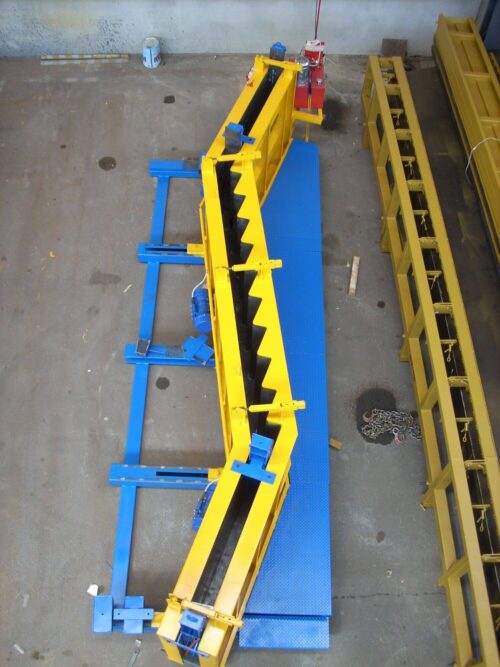
 Height: variable; Tread: variable; Landing flight stair size: variable; Mould opening system: manual or hydraulic Vibration system: electric or pneumatic.
 -

 Prestressed long line casting bed for TT elements. Length: 36m - 65.5m - 72m - up to 120 m Shares of prestressing force: 250t - 350t - 500t - up to 800t Section with height from 300 to 1200 mm and width from 1200 to 2800mm Mould movement: manual or hydraulic Possibility to make moulds of the "slow" type, 'Self-reacting' type or with anchoring structure


-
For the construction of panels, tilting tables by means of hydraulic telescopic cylinders: Size of panels: Thickness variable from 80 to 400 mm - Height from 2000 to 4500mm - Length from 6000 to 12000mm; Table width : 2500 - 4500 mm; Sides height: 50 + 400 mm; Table length: 6 - 8 - 12 - 25 - 50 - 60 to 100m; Hydraulic handling.
-
Beams for construction of agricultural manufactures type 'BOOMERANG' Lenght: 12 - 18 - 20 -24 metres.
-
For the construction of panels,flat table: Size of panels: Thickness variable from 80 to 400 mm - Height from 2000 to 4500mm - Length from 6000 to 12000mm; Table width : 2500 - 4500 mm; Sides height: 50 + 400 mm; Table length: 6 - 8 - 12 - 25 - 50 - 60 to 100m;
-
Lines for 'wing' type prefab elements Lines for beams with flat soffit Fire high-resistent slabs
-
Batteries for production of panels For the production of panels with two smooth surfaces as bottom mould: Size of panels: thickness from 80 to 400 mm, height from 2000 to 4500 mm and length from 6000 to 12000mm; Feasibility to produce from 4 to 20 cells contemporaneously; Possibility of tandem-batteries for 4 +4 / 6 +6 / 10 +10 panels; Electro-mechanical or hydraulic handling for opening and closing.
-
Prestressed universal long line casting bed. Length: 36m up to 120 - 200m Shares of prestressing force: 300t - 500t - 800t - 1200t - 1600t up to 3600t Base width from 300 to 2500mm Mould movement: manual or hydraulic Possibility to make moulds of the 'slow' type, 'Self-reacting' type or with anchoring structure
-
Height: variable; Tread: variable; Landing flight stair size: variable; Mould opening system: manual or hydraulic Vibration system: electric or pneumatic.
-
Prestressed long line casting bed for TT elements. Length: 36m - 65.5m - 72m - up to 120 m Shares of prestressing force: 250t - 350t - 500t - up to 800t Section with height from 300 to 1200 mm and width from 1200 to 2800mm Mould movement: manual or hydraulic Possibility to make moulds of the "slow" type, 'Self-reacting' type or with anchoring structure